
The Word Made Flesh: A Journey Through John 1
“Yet to all who did receive him, to those who believed in his name, he gave the right to become children of God— children born not of natural descent, nor of human decision or a husband’s will, but born of God.” John 1:12-13, NIV.
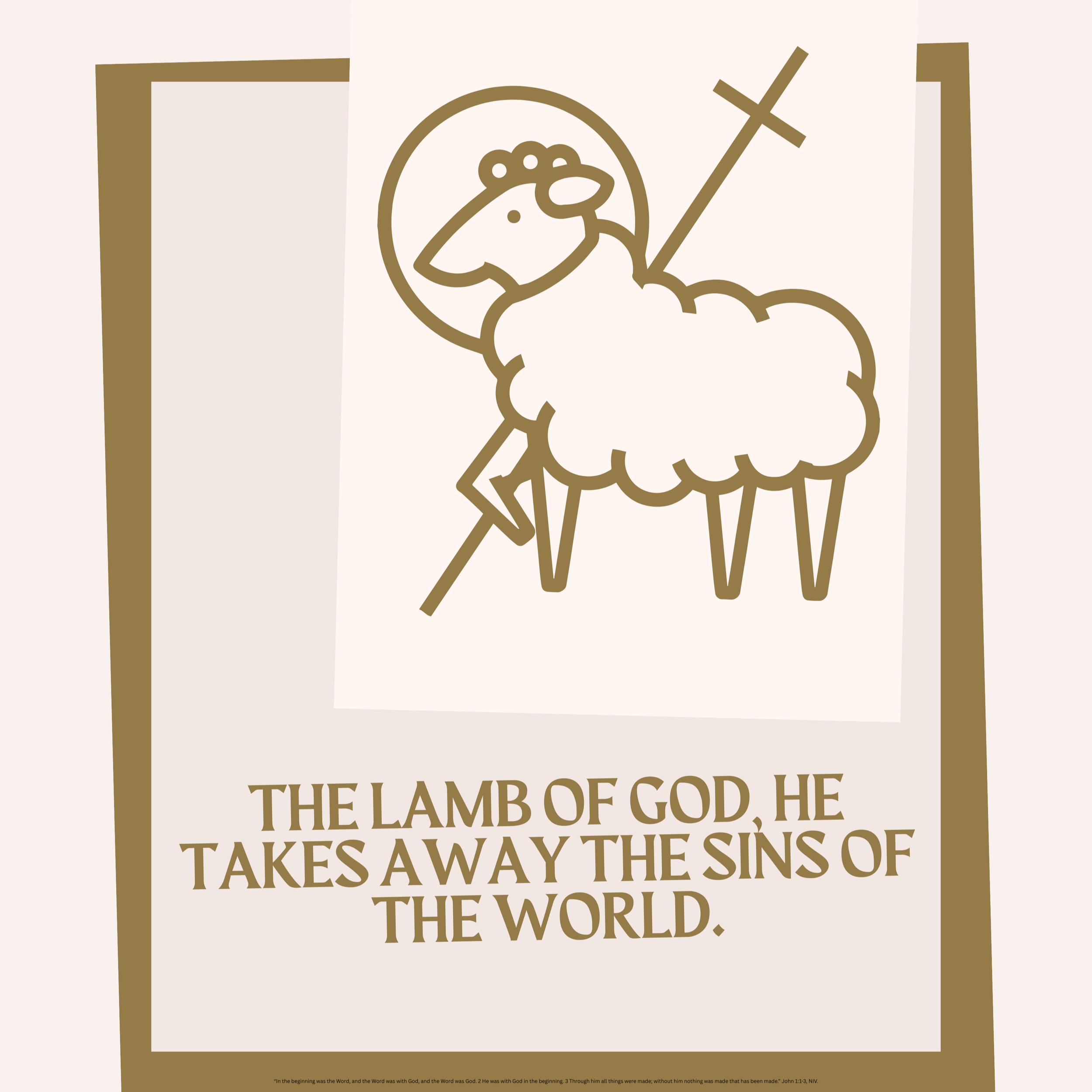
As winter comes to a close over the next few weeks and Easter approaches, many Christians take this time to reflect on the life, ministry, death, and resurrection of Christ. As a mom, I am always looking for age-appropriate ways to help my children gain a deeper understanding of Jesus, but especially as Easter approaches.
My oldest son is disciplined in reading his Bible on his own; however, I felt like, in this season, inviting him to join me in a reading through the book of John. As we go through John, I thought I would write devotionals along the way. We are going through the book chapter by chapter.
This week, we are focused on John 1.
The book of John was written by the disciple whom Jesus loved, along with the writings of 1, 2, and 3 John. John was writing to a primarily non-Jewish audience, and themes that run throughout the book of John are Jesus being presented as the Word, the Messiah, and the incarnate Son of God who brings eternal life to all who believe in Him.
In the beginning was the Word (logos), and the Word (logos) was with God, and the Word (logos) was God. 2 He was with God in the beginning (archē). 3 Through him all things were made; without him nothing was made that has been made.
The book of John opens with John taking the reader back to the beginning of time. “The Greek word behind ‘beginning’, archē, often bears the meaning ‘origin’ … for the Word who already was ‘in the beginning’ is soon shown to be God’s agent of creation (vv. 3–4), what we might call the ‘originator’ of all things.”[1] John refers to the Word, Jesus, being present at the origin of time. Jesus is called the Word (logos) in Greek, meaning "word" –conveying the meaning of a spoken word uttered by a living voice, but also making the connection that Jesus was with God at creation differentiating Him from God. However, John continues that the Word was God in the formation of the foundations of the world. Jesus is the Word, part of the triune God, and the creator of the world.
Jesus, within the Trinity, spoke the world into existence. By His breath was inspiration and creativity to form the foundation of the earth. The themes of Jesus being the Word, speaking a Word, and people believing/taking him at His word run throughout this book.
Jesus, the Word, took on earthly flesh (v. 14). He came on His own accord, and “his own” did not receive him; however, for those who do receive him and believe in Him are grafted into His family and called children of God.
John the disciple then transitions from the creation narrative and opens, as in the other synoptic gospels, with the introduction to Jesus' public ministry and his cousin, John the Baptist, announcing Jesus as the Christ.
John the Baptist shares that He would not have recognized Jesus as Messiah until God confirmed to him that He would see the Holy Spirit come down and remain on is “He who will baptize with the Holy Spirit” (John 1:33)
John the Baptist’s testimony and his recognition of Jesus as “the Lamb of God” prompt Jesus’ first disciples to follow him: one unnamed and the other, Andrew, who shares with his brother Simon, later called Peter.
Many speculations have been made concerning John the Baptist’s calling Jesus the “Lamb of God.” In a Jewish context, this would have harkened the idea of the Passover in Egypt, where the blood of a lamb was sacrificed to preserve the Jewish families, or lambs were sacrificed as a sin offering. Additionally, chapter one concludes with Nathanael and Philip following Jesus. Nathanael believed Jesus’ word that he had seen him in a vision under the fig tree, and he followed Jesus.
Takeaways from this chapter:
Jesus is part of the Trinity of the Godhead. God-the-Father, God-the-Son, and God-the-Holy-Spirit were all present at creation. Jesus chose to come to earth and take on flesh. Paul restates this truth in Colossians:
“For in him all things were created: things in heaven and on earth, visible and invisible, whether thrones or powers or rulers or authorities; all things have been created through him and for him” (Colossians 1:16, NIV).
John 1 reminds us that Jesus is not merely a teacher who stepped onto the pages of history for a moment. He is the eternal Word—present at creation, active in redemption, and still speaking today. The One who formed the foundations of the earth chose to step into flesh, to dwell among us, to be seen, touched, rejected, and received.
What moves me most is the promise tucked into those opening verses: that all who receive Him are given the right to become children of God. Not by striving. Not by lineage. But born of God.
As I read this chapter alongside my son, I am reminded that faith is both deeply theological and beautifully simple. Jesus speaks. We believe. He calls. We follow. Like Andrew, like Peter, like Nathanael—we respond to the Lamb of God and step into a new identity as His children.
[1] D. A. Carson, The Gospel according to John, The Pillar New Testament Commentary (Leicester, England; Grand Rapids, MI: Inter-Varsity Press; W.B. Eerdmans, 1991), 120.